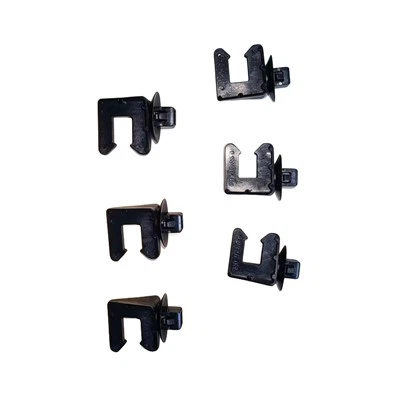
Hey there! As a supplier of Fastener Retainers, I'm super stoked to share with you how these nifty little devices work. Fastener retainers are like the unsung heroes in the world of mechanical and automotive applications. They play a crucial role in keeping things together, quite literally.
Let's start with the basics. A fastener retainer is a component designed to hold fasteners in place. Fasteners, such as bolts, screws, and nuts, are used to join different parts together. But sometimes, due to vibrations, movement, or other external factors, these fasteners can loosen over time. That's where the fastener retainer steps in.
One of the most common types of fastener retainers is the snap - in type. These are made from materials like plastic or metal. The snap - in retainer has a flexible design that allows it to be easily installed onto a fastener. When you push the fastener through the retainer, the retainer's flexible arms or tabs grip the fastener tightly. This grip creates a friction force that prevents the fastener from backing out.
For example, in automotive applications, a Fastener Retainer can be used to secure components in the engine compartment. The engine is a high - vibration environment, and without proper fastener retention, bolts and nuts can come loose, which can lead to serious problems. A well - designed fastener retainer will keep those fasteners in place, ensuring the reliability of the engine.
Another type of fastener retainer is the clip - on type. These clips are usually made of spring - like materials. They work by clamping onto the fastener or the part that the fastener is attached to. The clip exerts a constant pressure on the fastener, holding it firmly in position. This type of retainer is often used in situations where quick assembly and disassembly are required.
Let's talk about the materials used in fastener retainers. Plastic is a popular choice because it's lightweight, corrosion - resistant, and relatively inexpensive. Plastic fastener retainers can be molded into various shapes and sizes to fit different fasteners and applications. For instance, a Plastic Cable Support Bracket is a type of plastic fastener retainer that is used to hold cables in place. It has a simple yet effective design that allows it to snap onto the cable and keep it secure.
Metal fastener retainers, on the other hand, offer higher strength and durability. They are often used in heavy - duty applications where high levels of stress and vibration are present. Metal retainers can be made from materials like steel or aluminum. They are typically more expensive than plastic retainers but offer better performance in demanding environments.
Now, let's take a look at how fastener retainers are installed. The installation process can vary depending on the type of retainer. For snap - in retainers, you simply align the retainer with the fastener and push it onto the fastener until it clicks into place. This is a quick and easy process that doesn't require any special tools.
Clip - on retainers are also relatively easy to install. You just open the clip and place it around the fastener or the part. Then, you release the clip, and it will clamp down on the fastener. Some clip - on retainers may require a small amount of force to open and close, but overall, the installation is straightforward.
In the automotive industry, fastener retainers are used in a wide range of applications. For example, a Timing Chain Tensioner Blade Bracket is an important component that uses fastener retainers to keep the timing chain tensioner in place. The timing chain is a critical part of the engine, and any looseness in the tensioner can cause the chain to skip, which can lead to engine damage. A reliable fastener retainer ensures that the tensioner stays in the correct position, maintaining the proper tension on the timing chain.
Fastener retainers also play a role in reducing noise and vibration. When a fastener is loose, it can rattle and create unwanted noise. By using a fastener retainer to keep the fastener tight, you can eliminate this noise and improve the overall comfort of the vehicle or machinery.


In addition to automotive applications, fastener retainers are used in many other industries, such as aerospace, electronics, and manufacturing. In the aerospace industry, where safety is of the utmost importance, fastener retainers are used to secure critical components. In electronics, they are used to hold circuit boards and other components in place.
As a supplier of Fastener Retainers, I understand the importance of providing high - quality products. We use the latest manufacturing techniques and materials to ensure that our fastener retainers meet the highest standards of quality and performance. Our products are designed to be easy to install and reliable, which saves time and money for our customers.
If you're in the market for fastener retainers, whether it's for automotive, aerospace, or any other application, I encourage you to get in touch with us. We can provide you with detailed information about our products, including their specifications, materials, and installation instructions. We're also happy to work with you to find the right fastener retainer for your specific needs.
In conclusion, fastener retainers are essential components that play a vital role in keeping things together. They work by creating a secure grip on fasteners, preventing them from loosening due to vibrations and other factors. Whether you're dealing with a high - vibration engine or a delicate electronic device, a fastener retainer can help ensure the reliability and safety of your equipment. So, if you need fastener retainers, don't hesitate to reach out and start a conversation with us.
References:
- General knowledge of fastener technology and automotive engineering.
- Industry standards and best practices for fastener retention.