How to Ensure the Proper Fit of Plastic Auto Parts
As a plastic auto parts supplier, ensuring the proper fit of our products is of utmost importance. A well - fitting plastic auto part not only guarantees the functionality of the vehicle but also enhances its overall safety and aesthetic appeal. In this blog, I will share some key strategies and considerations to ensure the proper fit of plastic auto parts.
1. Precise Design and Engineering
The first step in ensuring a proper fit is to have a precise design. Our design team uses advanced computer - aided design (CAD) software to create detailed 3D models of the plastic auto parts. These models are based on the exact specifications provided by the vehicle manufacturers. For example, when designing a Plastic Bevel Gear for Air Vent, we take into account the dimensions of the air vent housing, the gear ratio required, and the rotational speed.
We also conduct finite element analysis (FEA) on the design. FEA helps us to simulate how the part will behave under different stress and load conditions. This allows us to make adjustments to the design before the production process begins. By doing so, we can prevent potential issues such as cracking, warping, or misalignment that could affect the fit of the part.
2. High - Quality Materials
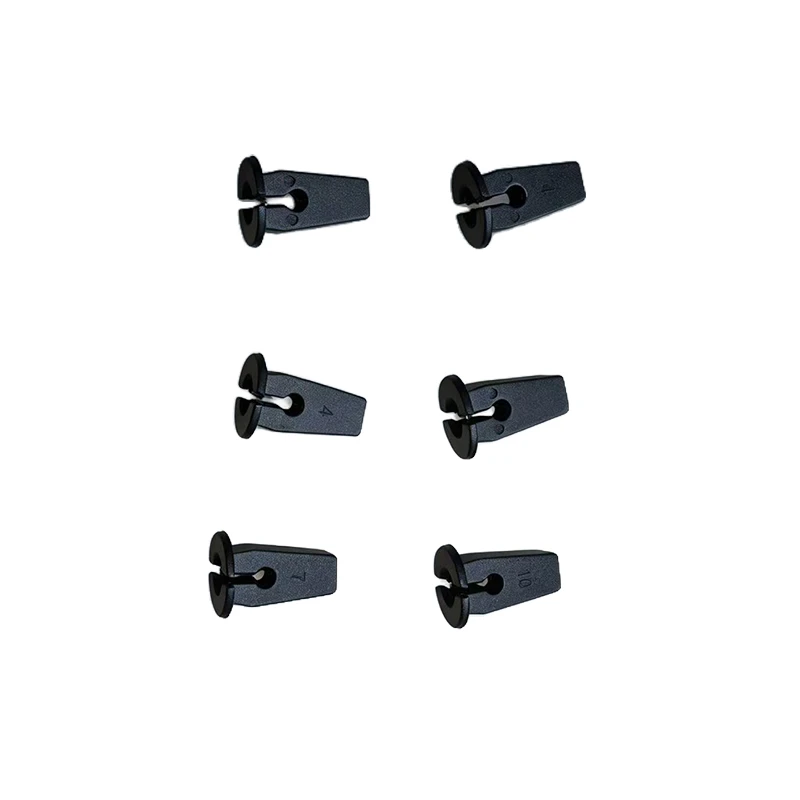
The choice of materials plays a crucial role in the fit of plastic auto parts. We source high - quality plastics that have the right mechanical properties for the specific application. For instance, for a Door Trim Plastic Nut, we use a plastic that is strong enough to withstand the torque applied during installation and use, yet flexible enough to avoid cracking.
We also ensure that the materials are resistant to environmental factors such as heat, cold, moisture, and chemicals. This is important because exposure to these elements can cause the plastic to expand, contract, or degrade over time, which can lead to a poor fit. We work closely with our material suppliers to ensure that the plastics meet our strict quality standards.

3. Advanced Manufacturing Processes
Our manufacturing processes are designed to produce plastic auto parts with high precision. We use injection molding, which is a widely used method for producing plastic parts. Injection molding allows us to create parts with complex shapes and tight tolerances.
During the injection molding process, we carefully control the temperature, pressure, and injection speed. These parameters can have a significant impact on the final dimensions and quality of the part. For example, if the temperature is too high, the plastic may become too fluid and result in a part that is larger than the desired size. On the other hand, if the temperature is too low, the plastic may not flow properly, leading to incomplete filling of the mold and a part with defects.
We also perform regular quality checks during the manufacturing process. This includes measuring the dimensions of the parts using precision measuring tools such as calipers and micrometers. Any parts that do not meet the specified tolerances are rejected and re - manufactured.
4. Testing and Validation
Before our plastic auto parts are released to the market, they undergo rigorous testing and validation. We conduct both physical and functional tests to ensure that the parts fit properly and perform as expected.
Physical tests include measuring the dimensions of the parts to ensure they match the design specifications. We also check for any surface defects such as scratches, cracks, or warping. Functional tests are designed to simulate real - world conditions. For example, for a Rear Air Outlet Housing, we test the airflow through the housing to ensure that it meets the required standards.
We also work closely with our customers to conduct on - vehicle testing. This allows us to see how the parts perform in the actual vehicle environment. If any issues are identified during the testing process, we make the necessary adjustments to the design or manufacturing process.
5. Collaboration with Vehicle Manufacturers
Collaboration with vehicle manufacturers is essential for ensuring the proper fit of plastic auto parts. We work closely with our customers from the early stages of the product development process. We provide them with our expertise in plastic part design and manufacturing, and they provide us with the vehicle specifications and requirements.
By working together, we can ensure that the plastic auto parts are designed and manufactured to fit seamlessly into the vehicle. We also participate in joint design reviews and testing programs with the vehicle manufacturers. This helps us to identify and resolve any potential fit issues early in the process.
6. Continuous Improvement
We are committed to continuous improvement in our processes and products. We collect feedback from our customers and use it to identify areas for improvement. We also invest in research and development to explore new materials, manufacturing processes, and design techniques.
For example, we are constantly looking for ways to reduce the weight of our plastic auto parts without sacrificing strength and fit. This not only helps to improve the fuel efficiency of the vehicle but also reduces the overall cost of production.
In conclusion, ensuring the proper fit of plastic auto parts requires a combination of precise design, high - quality materials, advanced manufacturing processes, thorough testing, collaboration with vehicle manufacturers, and continuous improvement. As a plastic auto parts supplier, we are dedicated to providing our customers with products that meet the highest standards of quality and fit.
If you are interested in purchasing our plastic auto parts or have any questions about our products, please feel free to contact us for a procurement discussion. We look forward to working with you to meet your automotive plastic part needs.
References
- "Automotive Plastics: Technology, Design, and Applications" by John W. Lyons
- "Plastic Materials and Processing" by Donald R. Paul and Christopher B. Bucknall