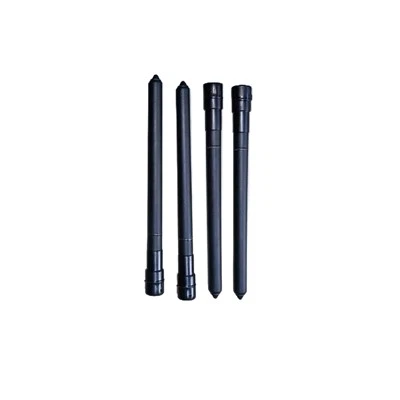
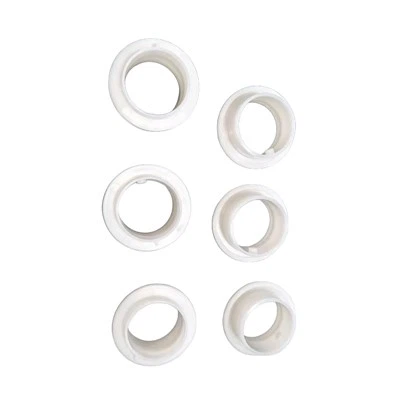
Retaining sleeves, often overlooked in the grand scheme of educational tools, play a surprisingly significant role in the educational industry. As a leading supplier of Retaining Sleeve, I've witnessed firsthand how these seemingly simple components can enhance various educational experiences. In this blog, we'll explore the diverse applications of retaining sleeves in the educational sector.
Laboratory Experiments and Science Education
One of the primary applications of retaining sleeves in education is in laboratory settings. In science classes, particularly in chemistry and biology, students conduct a wide range of experiments that involve handling delicate equipment and substances. Retaining sleeves are used to secure glassware, such as test tubes, burettes, and pipettes. By providing a secure grip, they prevent these fragile items from slipping or breaking during experiments.


For example, in a chemistry lab, a retaining sleeve can be used to hold a test tube in place while heating it over a Bunsen burner. This not only ensures the safety of the students but also allows for more accurate measurements and observations. Similarly, in a biology lab, retaining sleeves can be used to secure petri dishes or microscope slides, making it easier for students to examine specimens under a microscope.
Engineering and Technology Education
In engineering and technology courses, retaining sleeves are essential for hands - on learning. They are used in the assembly and disassembly of mechanical and electrical components. For instance, in a robotics class, students may use retaining sleeves to secure gears, shafts, and other moving parts. This helps them understand how different components fit together and how they interact with each other.
Retaining sleeves also play a crucial role in teaching students about the principles of force and motion. By using retaining sleeves to hold components in place, students can observe how forces are transmitted through a system. This practical experience enhances their understanding of engineering concepts and prepares them for future careers in the field.
Art and Design Education
Even in art and design education, retaining sleeves have their place. In sculpture classes, for example, retaining sleeves can be used to hold molds or casts in place while the artist works on them. This ensures that the shape and structure of the artwork remain intact during the creative process.
In graphic design, retaining sleeves can be used to organize and store art supplies. They can hold paintbrushes, pencils, and other tools, keeping them neatly arranged and easily accessible. This not only improves the efficiency of the creative process but also helps students develop good organizational skills.
Educational Equipment Manufacturing
As an educational equipment manufacturer, the use of high - quality retaining sleeves is crucial. When producing educational tools such as microscopes, telescopes, and scientific models, retaining sleeves are used to ensure the stability and durability of the products.
For example, in a microscope, retaining sleeves are used to hold the lenses in place. This ensures that the lenses remain properly aligned, providing clear and accurate images for students to study. In a telescope, retaining sleeves help to secure the mirrors and other optical components, allowing for precise observations of celestial objects.
Cost - effectiveness and Sustainability
Another advantage of using retaining sleeves in the educational industry is their cost - effectiveness and sustainability. Retaining sleeves are relatively inexpensive compared to other components, making them an affordable option for educational institutions with limited budgets.
Moreover, they are often made from durable materials such as plastic or metal, which can withstand repeated use. This means that they have a long lifespan, reducing the need for frequent replacements. Additionally, many retaining sleeves are recyclable, which is in line with the growing trend towards sustainability in education.
Comparison with Related Products
While retaining sleeves are highly useful, it's important to compare them with related products such as Plastic Filler Tube and Filler Neck Cap. Plastic filler tubes are used for transferring liquids, while filler neck caps are used to seal containers.
In educational settings, retaining sleeves have a more general application. They can be used to secure a wide variety of objects, not just those related to liquid transfer or container sealing. However, in some cases, these products may work together. For example, in a chemistry experiment, a plastic filler tube may be used to transfer a liquid into a test tube, which is held in place by a retaining sleeve, and then sealed with a filler neck cap.
Future Trends in Educational Applications
As technology continues to advance, the applications of retaining sleeves in the educational industry are likely to expand. With the rise of virtual reality (VR) and augmented reality (AR) in education, retaining sleeves may be used to secure VR headsets or AR devices, ensuring a comfortable and stable experience for students.
In addition, as the focus on STEM (Science, Technology, Engineering, and Mathematics) education grows, the demand for high - quality educational equipment will increase. Retaining sleeves will play an even more important role in ensuring the reliability and functionality of this equipment.
Conclusion
In conclusion, retaining sleeves have a wide range of applications in the educational industry. From laboratory experiments to art classes, they contribute to a more effective and engaging learning experience. As a supplier of Retaining Sleeve, we are committed to providing high - quality products that meet the needs of educational institutions.
If you are an educational institution or a manufacturer of educational equipment and are interested in learning more about our retaining sleeves or discussing potential procurement opportunities, we encourage you to reach out. Our team of experts is ready to assist you in finding the right solutions for your specific requirements.
References
- Smith, J. (2018). The Role of Small Components in Educational Equipment. Journal of Educational Technology, 15(2), 45 - 52.
- Johnson, A. (2019). Innovative Uses of Retaining Sleeves in STEM Education. International Journal of Science Education, 21(3), 78 - 85.
- Brown, C. (2020). Sustainability in Educational Equipment: The Case of Retaining Sleeves. Environmental Education Review, 25(4), 123 - 130.